
IECEx, Marine Type Approval and Hazardous Area Lighting: Understanding What Really Matters
For many years, marine classification society type approvals have played an important role in the selection of equipment for ships, offshore installations, and marine-related industries.
Approvals from organisations such as Lloyd’s Register, DNV, ABS, Bureau Veritas, and others have traditionally provided shipowners, shipyards, surveyors and specifiers with confidence that equipment has been reviewed by an independent marine classification body.
For Hazardous Area equipment, however, the certification landscape has changed significantly.
Today, the IECEx Scheme provides a globally recognised, independent certification route specifically created for equipment used in explosive atmospheres. For manufacturers, specifiers and end-users of Hazardous Area lighting, this raises an important question:
If a product is already IECEx certified, what additional technical assurance is provided by separate marine type approval?

Marine and offshore environments can include Hazardous Areas where flammable gases, vapours or dusts may be present. Selecting correctly certified Ex equipment is essential for safe inspection, maintenance and temporary lighting applications.
What is IECEx?
IECEx is the IEC System for Certification to Standards Relating to Equipment for Use in Explosive Atmospheres.
The scheme provides independent third-party certification for equipment intended for use in potentially explosive atmospheres, including locations where flammable gases, vapours, liquids, dusts, fibres or combustible particulates may be present.
An IECEx Certificate of Conformity is issued only after assessment by an approved IECEx Certification Body. This includes product testing against relevant international Ex standards, together with assessment of the manufacturer’s quality system to ensure that production equipment continues to conform to the certified design.
In practical terms, IECEx certification demonstrates that a product has been independently assessed against internationally recognised explosion-protection standards, such as the IEC 60079 series.
For Hazardous Area lighting, this is the core safety question: is the product suitable for safe use in the specified explosive atmosphere?
IECEx is an international certification scheme for equipment used in explosive atmospheres. Product suitability should always be verified against the relevant current IECEx certificate, product marking and instructions for the specific application.
What did marine type approval traditionally add?
Marine type approval has historically provided an additional layer of confidence for the marine and offshore sectors. It may be useful where equipment forms part of a vessel’s
permanent systems, where the class society has specific requirements, or where a project specification expressly calls for approval from a particular classification body.
For some types of marine equipment, this remains highly relevant. Navigation systems, fire protection equipment, life-saving appliances, permanent electrical installations and other vessel-critical systems may require specific marine approvals, depending on the equipment type, vessel class and applicable rules.
However, not all marine type approvals are the same, and not all provide additional testing beyond existing product certification.
For some categories of Hazardous Area portable, temporary, and installed lighting, marine type approval may rely substantially on a review of existing ATEX or IECEx certificates and supporting documentation, with little or no additional product-specific testing beyond that already completed for Ex certification.
Where this is the case, the Type approval does not necessarily demonstrate that the product is more robust, more corrosion-resistant, more vibration-resistant, or otherwise better suited to marine service than would already be evidenced through the existing certification and supporting technical data. It may simply confirm that the classification society has reviewed and accepted the existing Ex certification evidence.
Why IECEx is the key international certification framework for Ex equipment
IECEx was developed specifically for explosive atmospheres. Its purpose is to provide a harmonised international approach to Ex equipment certification, reducing the need for repeated testing and helping manufacturers, users and regulators rely on consistent standards across markets.
This is particularly important in industries such as oil and gas, petrochemical, chemical processing, marine, offshore, LNG, and other sectors where potentially explosive atmospheres may be present.
For international projects, IECEx is often more directly relevant than an individual classification society approval because it addresses the fundamental Hazardous Area requirement: compliance with recognised Ex standards.
While IECEx is not intended to replace marine classification requirements where these are specifically mandated, it remains the primary international certification framework for demonstrating explosion-protection compliance.
It also provides a transparent certification framework, with certificates published through the IECEx online certificate system. This allows specifiers, safety professionals and end-users to verify the certification status of equipment directly.
Marine type approval still has a role
This does not mean that marine classification society approvals are obsolete.
There may still be projects where Lloyd’s Register, DNV, ABS, Bureau Veritas or another classification body approval is specifically requested by a shipyard, owner, engineering contractor or surveyor. In those cases, the project specification should always be reviewed carefully.
There may also be products where marine type approval involves additional testing or assessment beyond Ex certification, such as vibration, salt mist, humidity, EMC or other environmental requirements. Where this is required and relevant, marine type approval can provide genuine additional assurance.
The key point is that marine type approval should not be treated as automatically superior to IECEx certification for Hazardous Area equipment. The value depends on what has actually been assessed.
Wolf Safety’s approach
Wolf Safety designs and manufactures portable, temporary, and installed lighting for safe use in Hazardous Areas. Our products are certified for use in potentially explosive atmospheres through recognised Ex certification routes, including IECEx and ATEX where applicable.
Following a thorough review of customer requirements and the scope of assessment provided by certain marine classification society type approvals, we have decided not to renew approvals that do not add meaningful technical assurance beyond our existing Ex certification.
The underlying IECEx and ATEX certification of the products concerned remains entirely unchanged, and all applicable explosion-protection certifications continue to be maintained.
This decision allows us to focus investment where it provides the greatest value to customers: product safety, innovation, certification to recognised Ex standards, manufacturing quality, and long-term reliability in demanding industrial environments.
Our commitment to the marine and offshore sectors remains unchanged. Wolf Safety products continue to be used in demanding Hazardous Area applications worldwide, including oil and gas, petrochemical, marine, offshore and industrial maintenance environments.
What should specifiers look for?
When selecting Hazardous Area lighting, the most important question is not simply how many approval marks appear on a certificate.
The more critical questions are:
- Is the product certified for the correct gas or dust group?
- Is it suitable for the required zone?
- Does the temperature class match the application?
- Is the ambient-temperature rating suitable?
- Is the product certified by a recognised Ex certification body?
- Is the certificate current and verifiable?
- Is the manufacturer operating under an appropriate quality assurance system?
For Hazardous Area applications, IECEx and ATEX certification provides clear and internationally recognised evidence against these core requirements.
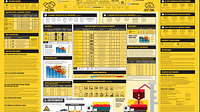
Our Ex Explained Poster is useful for selecting equipment for safe use in potentially explosive atmospheres - it can be downloaded below
Conclusion
Marine type approvals have historically played an important role in the maritime sector and may still be required for certain projects or product categories.
However, for Hazardous Area equipment, IECEx now provides the most relevant international certification framework for explosion protection. Where a marine type approval is based primarily on reviewing existing ATEX or IECEx certification, it may duplicate evidence already provided by the Ex certification itself.
For specifiers, distributors and end-users, the focus should be on understanding what each approval actually proves.
At Wolf Safety, our priority remains the same as it has been for more than a century: to provide safe, reliable and high-quality lighting, certified to the standards that matter most for the environments in which our products are used.