
Supporting Safer Transport of Wolf Rechargeable Products
Wolf ATEX and IECEx certified rechargeable products – including the R-50 and R-55 Rechargeable Torches and the Wolflite® XT Rechargeable Handlamps – use lithium-ion battery technology to deliver dependable performance in demanding Hazardous Area industrial environments.
Wolf Safety is introducing a new policy for the supply of these products. The selected rechargeable products, together with their replacement batteries, will now be supplied at a state of charge (SoC) not exceeding 30% of rated capacity, rather than fully charged.

The R-50 and R-55 Rechargeable Torches and the Wolflite® XT Rechargeable Handlamp
Why 30% state of charge?
Lithium-ion batteries store a significant amount of energy in a compact format, which is what makes them well suited to portable lighting products that need to deliver long operating times and reliable performance.
That same stored energy means lithium-ion products must be handled, stored and transported with care. If a cell is badly damaged, the energy it holds can be released as heat, creating a fire risk. Reducing the state of charge before transport reduces the amount of energy available should a cell be damaged, which in turn reduces the potential severity of that risk.
Separately supplied spare lithium-ion batteries have for some time been subject to a 30% maximum state of charge requirement for transport (air freight). The same principle is also receiving increasing attention across the transport industry for batteries supplied within, or fitted to, equipment.
Although this is not yet a universal regulatory requirement for the batteries contained within this equipment, Wolf has chosen to extend the same 30% limit to the lithium-ion battery-powered products within its ATEX rechargeable torch and handlamp range, including the R-50, R-55 and Wolflite® XT, as a voluntary, proactive step. This reflects Wolf’s ongoing commitment to product safety and helps customers prepare for the possibility of more restrictive carrier or transport requirements in future.
Which Wolf products are affected?
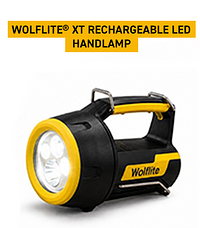
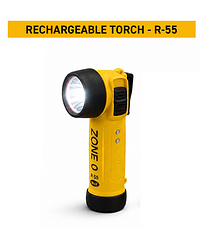
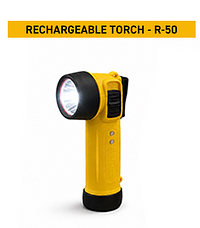
Replacement batteries supplied separately for these products
What will customers notice?
The main difference customers may notice is that a newly delivered torch or handlamp may need to be charged before it can be used.
In some cases, the product may not switch on immediately when removed from its packaging. This is because the product incorporates battery protection circuitry designed to prevent excessive discharge, which can prevent operation until the battery has been recharged. This does not necessarily indicate a fault.
Before first Use
Customers receiving a new R-50, R-55 or Wolflite® XT should:
- Place the product in the appropriate Wolf charger.
- Charge the product for the period stated in the instructions supplied with it.
- Complete this initial charge even if the product appears to operate when first unpacked.
Following this procedure helps ensure the battery reaches its intended operating condition. Full instructions are supplied with each product and are also available at wolfsafety.com/portable-atex-lighting.
Keeping rechargeable products ready for use
Rechargeable products should not be left in storage indefinitely without being recharged. To help maintain battery performance and maximise service life, Wolf recommends that R-50 and R-55 Rechargeable Torches and Wolflite® XT Rechargeable Handlamps are charged at least once every six months, even when not in regular use.
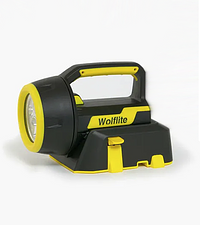
This is particularly important for equipment held for emergency response, shutdown work, confined space entry or other occasional-use applications.
Wolf’s commitment to safety
The introduction of a 30% maximum state of charge policy reflects Wolf’s commitment to supporting recognised lithium-ion transport safety practice, while continuing to provide the reliability customers expect from Wolf rechargeable lighting products.
For further guidance on charging, storing or transporting Wolf rechargeable products, please contact Wolf Safety or refer to the relevant product instructions.
For general guidance on the transport of lithium batteries, readers may also find information published by the International Air Transport Association (IATA) useful. Read more here